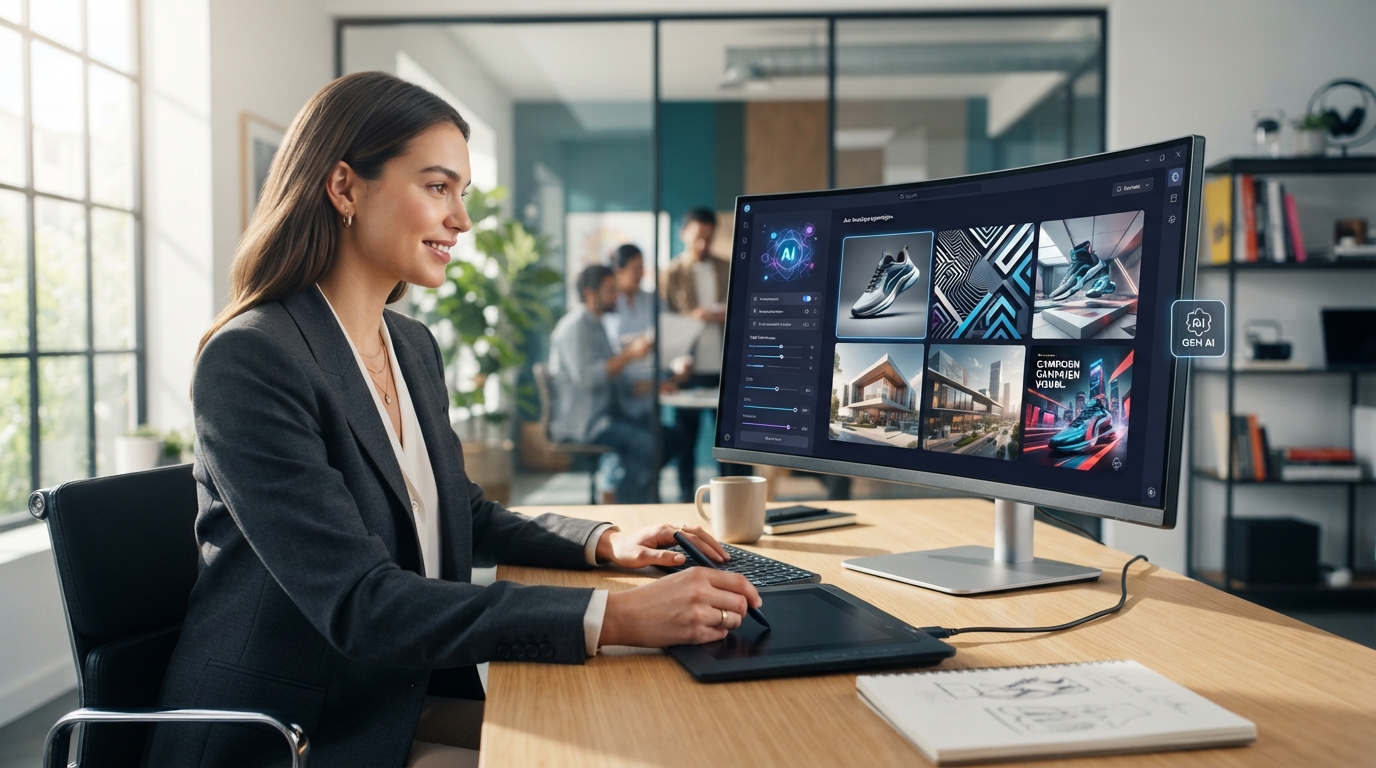
Marketers use text-to-image models in the creative process to dramatically accelerate rapid prototyping, slash asset production costs, scale personalized visual content, and bypass creative block through instant conceptualization. By converting natural language prompts into high-fidelity visuals using generative AI tools like Midjourney, DALL-E 3, and Stable Diffusion, creative teams can iterate on campaign concepts in seconds rather than days. This integration of generative AI into modern workflows transforms how brands brainstorm, storyboard, and execute their visual identity across digital channels.
The traditional creative workflow has long been bottlenecked by the time-consuming loop of briefing, drafting, feedback, and revision. When a marketing team needs a visual asset, they historically relied on expensive stock photography libraries—which often feel generic and overused—or commissioned bespoke graphic designs that took days or weeks to produce. The emergence of latent diffusion models and advanced neural networks has shattered these constraints. Today, art directors and copywriters can collaborate directly with AI engines to co-create bespoke imagery, aligning visual output with strategic intent in real-time.
By leveraging prompt engineering, marketers can specify composition, lighting, camera angles, color palettes, and artistic styles. This level of granular control over synthetic media generation allows for an unprecedented alignment between copy and design, enabling brands to maintain high narrative agility in an fast-paced digital ecosystem.
The Strategic Advantages of Text-to-Image Models in Modern Marketing
To understand why enterprise marketing departments and agile agencies alike are integrating generative AI into their creative pipelines, we must look at the tangible strategic advantages. These models are not merely novelty tools; they are foundational infrastructure for modern digital asset management and content production.
1. Hyper-Accelerated Prototyping and Storyboarding
Before a single dollar is spent on a high-production video shoot or a complex graphic design campaign, marketers must pitch concepts to stakeholders. Traditionally, this involved creating mood boards from mismatched stock images or hand-drawn sketches. Text-to-image models allow creative directors to generate highly specific, photorealistic storyboards that precisely match the envisioned campaign aesthetic. If a pitch requires a “futuristic cyber-punk city street bathed in neon rain with a sleek electric vehicle in the foreground,” a designer can generate twenty variations of this exact scene in under five minutes, refining the creative direction before greenlighting production budgets.
2. Drastic Reduction in Visual Asset Production Costs
Custom photography shoots require location scouting, talent hiring, equipment rental, and post-production editing. While high-impact hero assets will always justify these investments, daily social media content, blog headers, and programmatic ad variations do not. Text-to-image generators democratize high-quality graphic design, allowing small teams to produce stunning visual content at a fraction of the traditional cost. By shifting the focus from manual execution to strategic curation, brands can allocate their budgets more effectively.
3. Unlocking Hyper-Personalization at Scale
Modern consumers expect highly personalized digital experiences. In the past, dynamic creative optimization (DCO) was limited to changing headlines or call-to-action buttons on static background templates. With text-to-image models, marketers can generate tailored visual assets for highly specific audience segments. For instance, an outdoor apparel brand can instantly generate background imagery of a hiker in the Pacific Northwest for customers in Seattle, while simultaneously generating a desert-hiking backdrop for users in Arizona—all served dynamically based on user data.
4. Overcoming the “Blank Canvas” Syndrome
Creative fatigue is a major bottleneck in fast-paced marketing agencies. Text-to-image tools act as an infinite brainstorming partner. When designers are stuck, they can input abstract concepts, emotional keywords, or unconventional style pairings into a model to discover unexpected visual metaphors. This collaborative relationship between human intuition and machine randomness often sparks highly original creative directions that would not have emerged through traditional brainstorming sessions.
Real-Time Search Intent: What Marketers are Searching For
To give you a clearer picture of how industry professionals are navigating this technological shift, the following table maps real-time search queries to user intent, highlighting the exact creative solutions these generative models provide.
| User Search Query | Primary Intent | Marketing Application & Solution |
|---|---|---|
| “how to use midjourney for ad creatives” | Transactional / Educational | Learning to write precise prompts to generate high-converting social media ads and landing page banners. |
| “stable diffusion brand consistency tips” | Informational / Technical | Using custom models, LoRAs, and seed values to ensure generated images align with brand guidelines. |
| “copyright laws for AI generated images 2024” | Commercial / Legal | Understanding the legal landscape of synthetic media, commercial rights, and copyright-safe AI generation. |
| “AI storyboarding tools for video marketing” | Commercial Investigation | Evaluating software that integrates text-to-image models to build rapid pre-visualization assets for video ads. |
Integrating Generative AI into Your Creative Workflow: A Step-by-Step Blueprint
Successfully adopting text-to-image technology requires more than just typing random phrases into a prompt box. It demands a structured, repeatable workflow that blends human oversight with machine efficiency. Below is the step-by-step blueprint used by top-tier creative agencies.
Step 1: Establishing the Semantic Foundation (The Brief)
Every great visual asset starts with a strong creative brief. Instead of translating the brief directly into a prompt, marketers should break it down into core semantic components: Subject, Environment, Lighting, Style, and Composition. For example, rather than writing “a cool picture of coffee,” a structured prompt would be: “A minimalist close-up shot of a ceramic coffee mug on a rustic wooden table, soft morning sunlight streaming through a window, warm color palette, shallow depth of field, photorealistic –ar 16:9.”
Step 2: Iterative Refinement and Style Consistency
The first output is rarely perfect. Marketers must use iterative prompt engineering to refine their visuals. This involves using negative prompting (specifying what not to include, such as “blurry, low-resolution, extra limbs”) and leveraging advanced parameters like seed numbers to maintain visual consistency across a series of images. Many advanced teams train custom LoRA (Low-Rank Adaptation) models on their own brand assets to ensure the AI always outputs images that conform to the company’s unique visual identity.
Step 3: Post-Processing, Formatting, and Professional Polish
AI-generated images often require minor adjustments before they are ready for public distribution. This can involve upscaling the resolution, removing unwanted artifacts with generative fill tools in Adobe Photoshop, or overlaying brand typography and logos.
For marketers venturing into multi-channel publishing, maintaining visual consistency across digital assets and print layouts is crucial. Partnering with specialists like Collins Ghostwriting for their professional book formatting services ensures that your AI-generated visual concepts translate seamlessly into beautifully structured physical or digital publications, maintaining a premium brand standard across all touchpoints.
Comparative Analysis: Choosing the Right Text-to-Image Model
Not all text-to-image engines are created equal. Different models excel at different aspects of the creative process. The table below compares the three leading platforms currently dominating the marketing landscape.
| Model | Key Strength | Best Use Case for Marketers | Limitations |
|---|---|---|---|
| Midjourney (v6) | Unmatched aesthetic quality, artistic flair, and photorealism. | High-end editorial imagery, conceptual mood boards, and social media hero graphics. | Operates primarily through Discord; difficult to automate via API. |
| DALL-E 3 (OpenAI) | Exceptional prompt comprehension and text rendering within images. | Quick brainstorming, simple ad mockups, and illustrative content integrated with ChatGPT. | Can sometimes look overly “digital” or stylized; strict content safety filters. |
| Stable Diffusion (SDXL) | Complete open-source control, local deployment, and deep customization. | Enterprise-level workflows requiring strict brand control, custom model training, and API integration. | Steep learning curve; requires powerful local hardware or cloud computing setups. |
Ethical Considerations, Copyright, and Brand Safety
While the benefits of text-to-image models are undeniable, marketers must navigate several ethical and legal minefields to protect their brands. Addressing these challenges proactively is essential for any enterprise-grade creative strategy.
- Copyright and Intellectual Property: The legal landscape surrounding AI-generated art is still evolving. In many jurisdictions, purely AI-generated images cannot be copyrighted. To mitigate risk, many brands use hybrid workflows where AI-generated elements are heavily modified, composited, or polished by human designers, ensuring the final asset qualifies for copyright protection.
- Mitigating Algorithmic Bias: Generative models are trained on massive public datasets, which can inherit societal biases. Marketers must actively audit their prompts and outputs to ensure diverse, inclusive, and accurate representations of communities, avoiding the reinforcement of harmful stereotypes.
- Brand Safety and Platform Terms: Ensure that any tool used complies with commercial-use licensing. Platforms like Adobe Firefly are trained exclusively on licensed or public-domain imagery, offering enterprise users indemnification against copyright claims, making them a highly attractive option for risk-averse legal departments.
The Future of AI-Driven Art Direction
Text-to-image models are not replacing human creatives; they are elevating them. The role of the graphic designer and art director is shifting from manual execution to curation, orchestration, and strategic oversight. Creatives who master the art of directing AI will find themselves capable of executing massive, multi-faceted campaigns with unprecedented speed and precision.
As these models continue to evolve—integrating 3D asset generation, motion graphics, and real-time interactive design—the barrier between imagination and execution will completely dissolve. The brands that win in this new era will be those that successfully marry the boundless creative potential of generative AI with the strategic depth, emotional resonance, and cultural empathy of human marketers.