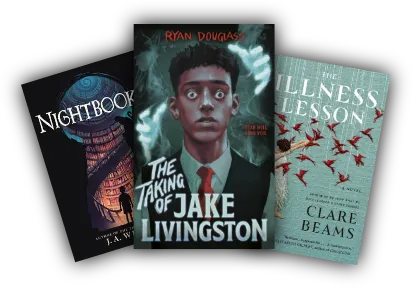

Yes, you can absolutely hire a professional to proofread your book, and doing so is one of the most critical steps in the publishing journey. When you hire a professional book proofreader, you can expect a meticulous, word-by-word quality control review of your final manuscript. This process eliminates lingering grammatical errors, spelling mistakes, typos, punctuation slips, and formatting inconsistencies without altering your unique authorial voice or story structure. It represents the final line of defense before your book goes to print or digital distribution, ensuring your work meets the rigorous standards of the publishing industry.
Writing a book is a monumental achievement, representing hundreds of hours of creative output, research, and drafting. However, even the most brilliant stories and well-researched non-fiction books can be undermined by simple typographical errors. Readers are highly sensitive to mistakes; a single misplaced comma or a recurring spelling slip can break their immersion, prompt negative reviews, and damage your credibility as an author. This comprehensive guide outlines exactly what to expect when hiring a professional to proofread your book, how to prepare your manuscript, and how to maximize your investment.
The Critical Distinction: Proofreading vs. Editing
One of the most common misconceptions among indie authors and first-time writers is confusing proofreading with other stages of the editorial pipeline. To set realistic expectations, it is vital to understand where proofreading fits within the broader production cycle.
| Editorial Stage | Primary Focus | Key Activities | When It Occurs |
|---|---|---|---|
| Developmental Editing | Structure, plot, pacing, character arcs, thematic consistency, and overall flow. | Rewriting scenes, reordering chapters, addressing plot holes, and refining tone. | First draft / early revisions |
| Copyediting / Line Editing | Sentence structure, syntax, readability, word choice, and factual consistency. | Improving flow, correcting stylistic issues, and checking style guides. | Middle to late drafts |
| Professional Proofreading | Mechanical errors, typographical slips, punctuation, spelling, and layout issues. | Correcting typos, fixing double spaces, verifying page numbers, and checking bad breaks. | Final draft (pre-publication) |
If your book still requires structural adjustments, character development, or major stylistic polishing, you may actually need to look for experienced book editors for hire before hiring a proofreader. Proofreading is strictly the final quality-assurance pass when the text is considered “locked” and ready for layout design.
What Exactly Does a Professional Book Proofreader Do?
When you hand over your manuscript to a professional, they do not simply run a automated spell-check. They apply a highly trained eye, deep knowledge of industry style guides (such as the Chicago Manual of Style or AP Stylebook), and an analytical approach to your text. Here is what a professional proofreader checks:
- Spelling and Typographical Errors: Catching homophones (e.g., their/there/they’re, peak/peek/pique) that automated software regularly misses, along with simple letter transpositions.
- Punctuation Consistency: Ensuring correct usage of em-dashes, en-dashes, hyphens, quotation marks, commas, and semicolons according to your chosen style guide.
- Grammatical Precision: Fixing subject-verb agreement issues, dangling modifiers, incorrect pronoun usage, and tense inconsistencies.
- Formatting and Layout Elements: Verifying that chapter numbers run sequentially, running headers match the text, page numbers are accurate, and there are no awkward line breaks or “widows and orphans” (single lines of text left at the top or bottom of a page).
- Internal Consistency: Double-checking that character names do not change spelling mid-book, timelines remain logical, and capitalized terms are handled uniformly throughout the manuscript.
What to Expect During the Proofreading Process: Step-by-Step
Working with a professional proofreader is a collaborative, structured process. Knowing what to expect at each phase helps ensure a smooth experience and a pristine final product.
Phase 1: The Initial Assessment and Quote
Most professional proofreaders or agencies will ask to see a sample of your manuscript (usually 1,000 to 2,000 words) before agreeing to a price or timeline. This sample allows them to assess the level of intervention your text requires. If the writing contains heavy grammatical issues, they may recommend a copyedit instead of a straight proofread.
Phase 2: Establishing the Style Sheet
A professional proofreader will ask if you have an existing style sheet. If you worked with a copyeditor previously, they should have provided one. This document tracks specific spelling choices (e.g., American vs. British English), rules for capitalization, character descriptions, and punctuation preferences peculiar to your book.
Phase 3: The Deep-Dive Pass
The proofreader will systematically read your manuscript. Most modern proofreaders work digitally using Microsoft Word’s “Track Changes” feature or Adobe Acrobat’s markup tools for PDF galleys. Every correction, suggestion, and query is logged transparently so that you retain ultimate creative control over your work.
Phase 4: Reviewing Queries and Finalizing
Along with direct corrections, you will receive editorial queries. These are comments left in the margin where the proofreader requires your clarification—such as an ambiguous sentence that could have multiple meanings, or a potential factual error. Once you resolve these queries, the final, polished manuscript is generated.
How Much Does Professional Book Proofreading Cost?
Proofreading rates vary depending on the length of your manuscript, the complexity of the subject matter, the turnaround time, and the proofreader’s level of experience. The industry standard is typically calculated per word, though some professionals charge per hour or per page.
| Manuscript Length (Words) | Estimated Cost Range (USD) | Typical Turnaround Time |
|---|---|---|
| 20,000 (Novella / Short Non-Fiction) | $300 – $600 | 5 – 7 Business Days |
| 50,000 (Standard Non-Fiction / YA) | $750 – $1,500 | 10 – 14 Business Days |
| 80,000 (Standard Novel / Memoir) | $1,200 – $2,400 | 2 – 3 Weeks |
| 120,000 (Epic Fantasy / Academic Work) | $1,800 – $3,600 | 3 – 4 Weeks |
While it may be tempting to seek out budget options on freelance bidding platforms, remember that you get what you pay for. A highly qualified proofreader brings years of training, a sharp eye for detail, and a deep understanding of publishing standards that automated tools simply cannot match.
Why Self-Publishing Authors Cannot Skip This Step
For authors utilizing modern self-publishing services, the responsibility of quality control rests entirely on your shoulders. Traditional publishing houses employ teams of editors and proofreaders to vet every book before it reaches store shelves. If you are self-publishing, you must replicate this professional infrastructure to compete effectively.
Investing in professional Book Proofreading is the single best way to protect your brand as an author. When your book is free of distracting errors, readers can focus entirely on your storytelling, your insights, or your message. This leads to better reviews, higher word-of-mouth recommendations, and stronger long-term sales.
“A book with a brilliant plot but poor proofreading is like a luxury sports car with a cracked windshield. No matter how fast it goes, the driver will always be distracted by the flaw.” — Industry Editorial Insight
Preparing Your Book for Other Critical Launch Steps
Once your manuscript is fully proofread and polished, it is ready to move into the final stages of the production pipeline. To ensure your book stands out in a crowded marketplace, consider how your clean text integrates with other vital services:
- Interior Formatting: Converting your proofread Word document into a professionally typeset PDF for print and an ePub file for digital e-readers.
- Visual Appeal: Ensuring your cover matches the high quality of your interior by investing in professional book-cover-design-services. A stunning cover attracts readers, while a flawless interior keeps them reading.
- Distribution Prep: Uploading your finalized files to major platforms like Kindle Direct Publishing (KDP), IngramSpark, or Draft2Digital.
Common Search Queries: What Authors Ask About Book Proofreading
Can I just use Grammarly or AI to proofread my book?
While AI-driven spelling and grammar checkers are excellent tools for preliminary drafts, they are not a substitute for human proofreaders. AI lacks the ability to understand nuanced context, subtext, character voice, and creative style choices. An AI will often flag correct, stylistically deliberate choices as errors, or miss subtle context-based mistakes entirely (such as using “loose” instead of “lose” in a complex sentence).
Should I proofread before or after book formatting?
Ideally, your book should undergo a thorough copyedit and primary proofread *before* formatting. However, a final “cold fashion” proofread should always occur *after* the book has been formatted into its final page layout. This layout proofread catches errors introduced during the formatting process, such as missing text blocks, bad hyphenation breaks, or shifting page numbers.
How do I know if my book is ready for a proofreader?
Your book is ready for a proofreader when you have finished all content revisions, self-editing passes, and professional copyediting. If you are still considering changing plot points, rewriting chapters, or altering character arcs, you are not yet ready for a proofreader.
Pro Checklist: Preparing Your Manuscript for Your Proofreader
To get the absolute most out of your professional proofreading experience, complete these steps before sending over your manuscript:
- Consolidate Your Files: Ensure your entire manuscript is compiled into a single, clean Microsoft Word document (.docx) or PDF, depending on your proofreader’s preference.
- Establish Your Style Preferences: Clearly communicate whether you are writing in US, UK, Canadian, or Australian English.
- Provide a Character/Term Sheet: List any unusual names, made-up fantasy words, or highly technical jargon to prevent the proofreader from flagging them as spelling errors.
- Resolve Outstanding Comments: Delete any personal notes, bracketed reminders, or internal questions to avoid confusing your proofreader.
The Final Word: Safeguarding Your Literary Legacy
Hiring a professional to proofread your book is not an administrative chore; it is an investment in your brand, your reputation, and your literary legacy. By partnering with a dedicated proofreader, you ensure that your book is judged solely on the strength of your ideas and the beauty of your writing, rather than easily avoided mechanical errors.