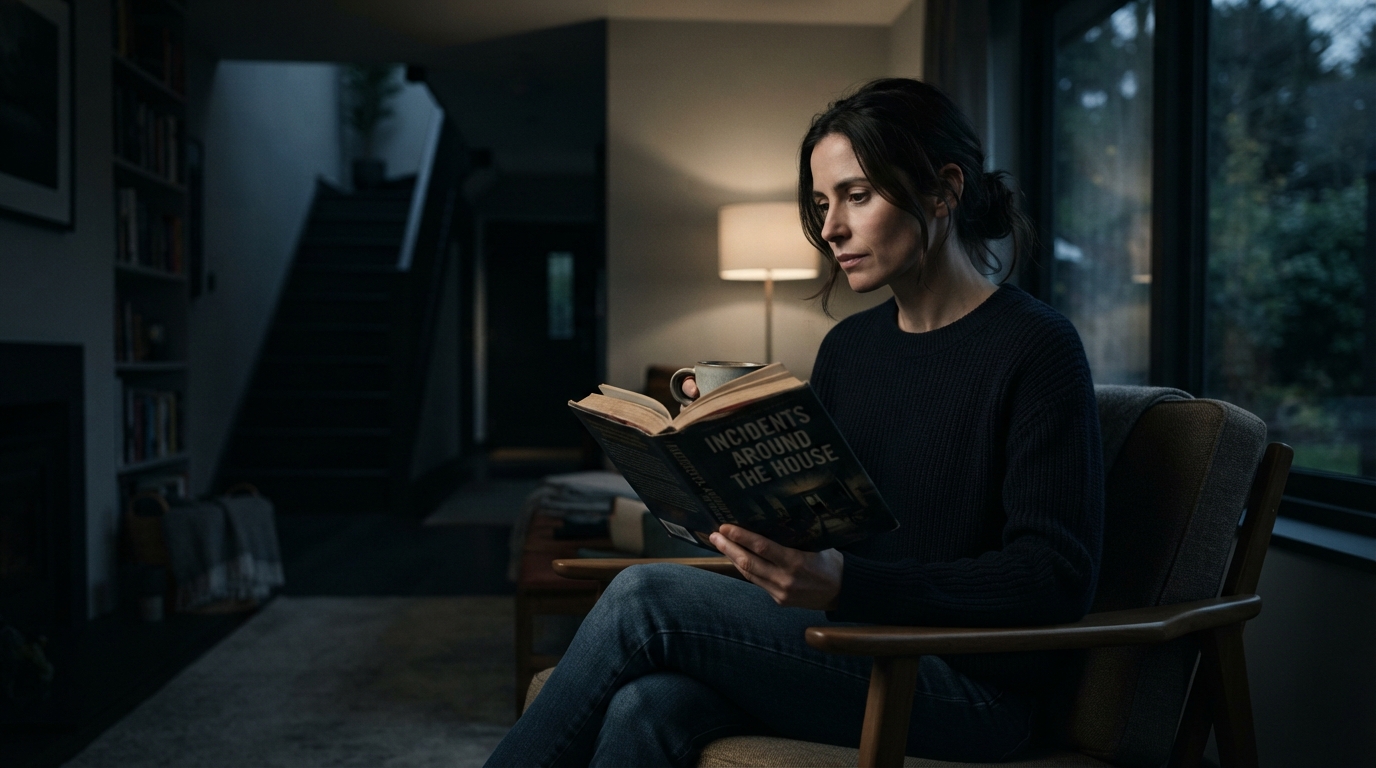
Josh Malerman, the bestselling author of Bird Box, has once again disrupted the horror genre with his deeply unsettling novel, Incidents Around the House. Written entirely from the perspective of an eight-year-old girl named Bela, the book explores the slow, agonizing dissolution of a family haunted by a malevolent entity known as “Other Mommy.” For readers seeking a quick resolution: the ending of Incidents Around the House culminates in Bela finally giving “Other Mommy” permission to enter her body. In a heartbreaking bid to save her fractured parents, Bela yields to the entity’s persistent question, “Can I go inside you?”, resulting in a chilling, tragic possession that signifies the total destruction of her family unit and the entity’s triumph.
This comprehensive guide provides an in-depth book review, a detailed breakdown of the climax, an analysis of the core themes, and answers to the most pressing questions surrounding this literary horror masterpiece.
The Premise: A Child’s-Eye View of Absolute Terror
The brilliance of Incidents Around the House lies in its narrative voice. Bela is a typical eight-year-old child who lives with her mother (“Mommy”) and father (“Daddio”). However, her life is far from normal. For as long as she can remember, a terrifying entity has resided in her bedroom closet. Bela calls this entity Other Mommy because it resembles her mother, albeit in a corrupted, deeply disturbing form.
Unlike traditional ghost stories where spirits remain hidden or communicate through subtle paranormal activity, Other Mommy is highly active and conversational. She continuously asks Bela one specific, horrifying question: “Can I go inside you?”
For a long time, Bela instinctively says no. But as the tension inside the household escalates—not just from the supernatural presence, but from the crumbling marriage of her parents—Other Mommy’s power grows. The entity feeds on the family’s negative energy, leveraging their secrets, infidelities, and financial stress to isolate them from the outside world.
Incidents Around the House Ending Explained: The Ultimate Sacrifice
To fully comprehend the ending of Josh Malerman’s novel, one must look at the psychological mechanics of the haunting. Other Mommy does not want to simply kill Bela’s family; she wants to inhabit Bela to experience the physical world and the warmth of a mother’s love, even if her version of “love” is perverted and destructive.
The Escalation and Isolation
As the novel progresses, the “incidents” around the house transition from minor anomalies to violent disruptions. The entity begins manifesting outside the closet, appearing to Bela’s parents and driving them to the brink of madness. In a desperate attempt to escape, the family flees their home, staying in motels and temporary rentals. However, they quickly realize that Other Mommy is not tethered to the house; she is tethered to Bela.
The familial unit begins to shatter under the pressure. Mommy and Daddio’s marriage, already weakened by infidelity and unspoken resentment, completely disintegrates. Other Mommy uses these emotional fractures as entry points, whispering secrets to Bela and manipulating the parents’ fears.
The Climax: The Back Seat of the Car
The final confrontation occurs in the cramped, claustrophobic confines of the family car. At this point, the family is entirely isolated, driving aimlessly to escape an entity that cannot be outrun. The physical presence of Other Mommy becomes undeniable and terrifyingly tangible.
Mommy and Daddio are physically and emotionally broken. They can no longer protect Bela, nor can they protect themselves from each other. Seeing her parents in agony, and believing that she is the sole cause of their suffering, Bela makes a devastating decision. She realizes that the only way to stop Other Mommy from hurting her parents any further is to give the entity exactly what it wants.
The Fateful Consent
In the novel’s final moments, Bela looks at Other Mommy and finally answers the recurring question. She says: “Yes. You can go inside me.”
The possession is not depicted with dramatic, Hollywood-style exorcism tropes. Instead, it is a quiet, deeply unsettling transition. Other Mommy merges with Bela. The novel ends with the chilling realization that the innocent eight-year-old girl readers have rooted for is gone, replaced by a hybrid entity that now possesses physical form and agency in the real world.
The tragedy of the ending lies in Bela’s motivation: she surrendered her soul out of pure, unconditional love for her parents, unaware that by letting the entity in, she has ensured their ultimate doom.
Thematic Analysis: What is Other Mommy?
While Incidents Around the House works beautifully as a literal supernatural horror novel, it also functions as a powerful metaphor for domestic trauma. Josh Malerman masterfully weaves several thematic layers into the narrative:
- The Decay of Marriage: Other Mommy thrives on the discord between Mommy and Daddio. The entity’s strength directly correlates with the parents’ arguments, lies, and emotional distance. In many ways, Other Mommy is the physical manifestation of a divorce—a terrifying, looming presence that threatens to tear a child’s world apart.
- The Loss of Childhood Innocence: Bela is forced to carry secrets that no eight-year-old should bear. She becomes the mediator between her parents and the protector of the household, a role reversal common in dysfunctional families. Her ultimate surrender is the death of her childhood.
- The Vulnerability of the Nuclear Family: The book challenges the idea of the home as a safe haven. The “incidents” happen in the spaces where the family should feel most secure, proving that external walls cannot keep out internal rot.
Critical Book Review: Why This Novel Stands Out
Josh Malerman’s narrative choices in Incidents Around the House make it one of the most unique horror novels of recent years. Writing from the perspective of an eight-year-old is a high-risk, high-reward strategy, and Malerman executes it flawlessly.
The Power of Child-Like Prose
By using simple vocabulary, repetitive phrasing, and a naive worldview, Malerman creates an atmosphere of intense vulnerability. Bela does not understand the complex adult concepts of infidelity or financial ruin, but she feels their weight. This disconnect between what Bela observes and what the reader understands creates a profound sense of dramatic irony and dread.
Pacing and Structural Tension
The book is relentlessly paced. Because it is written as a continuous stream of experiences without traditional chapter breaks, the reader is trapped in Bela’s claustrophobic reality. There are no safe spaces to pause and catch your breath, mirroring the family’s inability to escape Other Mommy.
For writers aspiring to construct similarly gripping, high-concept psychological horror stories, analyzing Malerman’s structural pacing is highly educational. If you are looking to bring your own terrifying concepts to life, partnering with professional Ghostwriting Services can help elevate your manuscript to industry standards. Industry leaders like Collins Ghostwriting specialize in structuring complex narratives, ensuring that your story maintains tension from the first page to the last.
Real-Time Google Search Queries & Reader FAQs
To help readers navigating the complex narrative of Malerman’s latest hit, we have compiled and answered the most common search queries regarding the book.
| Common Search Query | The Definitive Answer |
|---|---|
| Is Other Mommy real or a hallucination? | Other Mommy is a real, physical entity. While she feeds on psychological trauma, her physical interactions with the parents and her ultimate possession of Bela prove she is not a figment of Bela’s imagination. |
| What happens to Bela’s parents at the end? | While their physical survival is left somewhat ambiguous, they are emotionally destroyed. Their daughter is gone, possessed by the entity, meaning their family unit is permanently shattered. |
| Why did Bela say yes to Other Mommy? | Bela said yes out of love. She believed that by sacrificing herself and letting the entity inside, Other Mommy would stop torturing her mother and father. |
| Is there a sequel to Incidents Around the House? | As of now, Josh Malerman has not announced a sequel, but the open-ended, chilling nature of the possession leaves room for a potential continuation. |
Comparative Analysis: How It Matches Up to Bird Box
Many readers will inevitably compare this novel to Malerman’s breakout hit, Bird Box. While both books deal with the theme of survival against an unimaginable threat, their execution is vastly different.
Where Bird Box utilizes a sweeping, post-apocalyptic canvas where sensory deprivation is the key to survival, Incidents Around the House is hyper-focused, domestic, and intensely intimate. The monster in Bird Box is external and global; the monster in Incidents is internal and deeply personal. This shift in scale makes Incidents Around the House feel much more immediate and emotionally devastating.
Final Verdict: A Modern Horror Classic
Incidents Around the House is a masterclass in psychological suspense and supernatural dread. Josh Malerman has crafted a story that lingers long after the final page is turned. It challenges our perceptions of safety, family dynamics, and the lengths to which a child will go to protect the people she loves.
Whether you are a seasoned horror enthusiast or a casual reader looking for a deeply moving, terrifying read, this book is an absolute must-read. Just be prepared to look at your closet doors a little differently when you turn off the lights tonight.