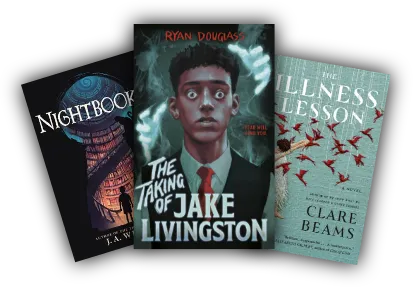
Speculative fiction is a broad, umbrella category of narrative fiction that encompasses genres containing elements that do not exist in reality, recorded history, nature, or the present universe. It includes science fiction, fantasy, horror, dystopian fiction, alternate history, and magical realism, all unified by a foundational “what if?” premise that challenges the boundaries of our known world. By stripping away the constraints of everyday reality, speculative fiction allows creators to explore profound philosophical, sociological, and technological questions in highly imaginative settings.
For decades, literary critics and readers alike have debated where the boundaries of speculative fiction lie. Is it a genre in its own right, or is it a massive super-category that houses some of the most influential storytelling in human history? To truly understand this literary phenomenon, we must dissect its origins, map its expansive taxonomy, and examine the masterworks that have shaped our collective cultural imagination.
The Genesis and Evolution of Speculative Fiction
While speculative storytelling has existed since ancient times—evident in mythological epics like The Epic of Gilgamesh and Homer’s Odyssey—the term “speculative fiction” as a modern critical designation has a more recent history.
The coining of the term is widely attributed to the acclaimed science fiction author Robert A. Heinlein. In his 1947 essay, “Writing Speculative Fiction,” Heinlein used the term as a synonym for science fiction, specifically to describe stories that prioritized scientific and technological plausibility over mere fantasy. Heinlein sought to elevate the status of sci-fi from the cheap pulp magazines of the era to a respected literary form that intellectualized future possibilities.
However, the definition underwent a dramatic expansion during the New Wave movement of the 1960s and 1970s. Writers and critics began to use “speculative fiction” to encompass works that did not fit neatly into the rigid boxes of hard science fiction or traditional high fantasy. It became an inclusive term for any story that posited an alternative reality.
In the late 20th and early 21st centuries, literary giant Margaret Atwood further refined the discourse. Atwood famously distinguished between science fiction and speculative fiction. For Atwood, science fiction deals with “things that have not happened yet,” such as space travel to distant galaxies or alien invasions. In contrast, she defined speculative fiction as stories containing scenarios that could actually happen using technologies and social structures already available to us, as demonstrated in her masterpiece, The Handmaid’s Tale.
Today, the literary establishment generally views speculative fiction as the ultimate macro-genre—an expansive canopy under which all non-mimetic (non-realistic) literature resides.
The Master Taxonomy: Core Genres of Speculative Fiction
To navigate the vast landscape of speculative fiction, it is helpful to break it down into its core genres. Each of these genres operates under its own set of narrative rules, thematic concerns, and world-building conventions.
| Genre | Defining Characteristic | Primary Narrative Question | Classic Example |
|---|---|---|---|
| Science Fiction | Grounded in scientific principles, technology, and future projection. | How will technological advancements alter human nature? | Dune by Frank Herbert |
| Fantasy | Features magic, supernatural elements, and mythological creatures. | How do heroes navigate worlds governed by magical laws? | The Lord of the Rings by J.R.R. Tolkien |
| Dystopian Fiction | Depicts repressive, totalitarian, or environmentally degraded societies. | What happens when societal systems completely fail the individual? | 1984 by George Orwell |
| Alternate History | Explores worlds where historical events took a different path. | How would the world look if a critical historical event changed? | The Man in the High Castle by Philip K. Dick |
| Magical Realism | Weaves fantastical elements seamlessly into otherwise realistic settings. | How does the extraordinary manifest within the mundane? | One Hundred Years of Solitude by Gabriel García Márquez |
| Apocalyptic/Post-Apocalyptic | Focuses on the end of civilization and the struggle to survive afterward. | What remains of humanity when our structures are stripped away? | The Road by Cormac McCarthy |
1. Science Fiction (Sci-Fi)
Science fiction explores the impact of actual, imagined, or theoretical science on society and individuals. It is often divided into “hard sci-fi” (which strictly adheres to known scientific laws, such as Andy Weir’s The Martian) and “soft sci-fi” (which focuses more on social sciences, psychology, and philosophy, such as Ursula K. Le Guin’s The Left Hand of Darkness).
2. Fantasy
Unlike science fiction, which justifies its wonders through rationalism, fantasy embraces the inexplicable and the magical. High fantasy (or epic fantasy) takes place in entirely constructed worlds with their own physical laws and histories (e.g., George R.R. Martin’s A Song of Ice and Fire). Low fantasy brings magical elements into our real world (e.g., J.K. Rowling’s Harry Potter series).
3. Horror and Dark Fantasy
While some horror is purely psychological, speculative horror introduces supernatural, cosmic, or unnatural threats designed to elicit dread and terror. From the cosmic indifference of H.P. Lovecraft’s Cthulhu Mythos to modern supernatural thrillers, speculative horror forces characters to confront forces beyond human comprehension.
4. Dystopian and Utopian Fiction
Utopian fiction presents an idealized vision of a perfect society, though this is rare in modern literature as conflict drives narrative. Far more common is dystopian fiction, which serves as a cautionary tale. By magnifying current social, political, or technological trends, dystopian authors warn readers of the dark paths humanity might take.
5. Alternate History
This genre alters a specific historical turning point—often called the “point of divergence”—and traces the butterfly effect of that change. What if the Axis powers won World War II? What if the Library of Alexandria never burned? These stories blend meticulous historical research with creative speculation.
6. Magical Realism
Originating primarily in Latin American literature, magical realism treats supernatural occurrences as ordinary, everyday events. There are no elaborate magic systems or explanations; instead, the miraculous is presented with a matter-of-fact tone, highlighting the deeper emotional and cultural truths of the characters’ lives.
Subgenres and Hybrid Movements: Where the Magic Merges
Because speculative fiction is defined by its lack of realistic boundaries, writers frequently blend genres to create innovative subgenres. These hybrids offer some of the most dynamic and culturally resonant stories in contemporary literature.
- Cyberpunk: A subgenre of science fiction characterized by “high tech and low life.” It focuses on advanced technology like cybernetics and artificial intelligence juxtaposed with social decay, corporate dominance, and underground hacker culture (e.g., William Gibson’s Neuromancer).
- Steampunk: A design philosophy and literary subgenre that imagines a world where modern technology is powered by 19th-century steam machinery. It is heavily influenced by the Victorian era and the works of Jules Verne and H.G. Wells.
- Slipstream: A term coined by Bruce Sterling to describe a kind of writing that sits in the liminal space between speculative fiction and literary fiction. It produces a feeling of cognitive dissonance, strangeness, or surrealism without necessarily relying on standard sci-fi or fantasy tropes (e.g., the works of Haruki Murakami).
- Solarpunk: A relatively modern, optimistic movement that envisions a sustainable, ecologically balanced future where humanity and technology coexist harmoniously with nature.
The Cognitive Mechanics of “What If”: Why Speculative Fiction Matters
Why do we read stories about things that cannot happen? Literary theorist Darko Suvin introduced the concept of cognitive estrangement to explain this phenomenon. Speculative fiction distances us from our immediate reality (estrangement) while maintaining a logical, internally consistent framework that allows us to make sense of the story (cognitive).
By placing familiar human struggles in unfamiliar settings, speculative fiction bypasses our psychological defenses and biases. A reader might reject a contemporary political essay about government surveillance, but they will willingly engage with the same themes when reading about the telescreens in Orwell’s Oceania. It acts as a safe laboratory where we can test the boundaries of ethics, technology, and human resilience.
“Speculative fiction is not about predicting the future; it is about imagining alternative ways of living, thinking, and being. It is the literature of radical possibility.”
Key Examples of Speculative Fiction Across Eras
To appreciate the sheer scale of speculative fiction, it is valuable to look at landmark texts that have defined the genre across different eras.
Mary Shelley, Frankenstein (1818)
Often cited as the first true science fiction novel, Mary Shelley’s masterpiece is a quintessential speculative work. It asks a profound question: if humanity gains the power of creation, what is our moral obligation to our creations? The novel brilliantly merges gothic horror with early scientific speculation.
Aldous Huxley, Brave New World (1932)
Huxley’s vision of a highly engineered, consumerist utopia that is actually a soul-crushing dystopia remains incredibly prescient. It speculates on reproductive technology, psychological conditioning, and the sacrifice of freedom for comfort.
Octavia Butler, Kindred (1979)
Octavia Butler’s groundbreaking novel blends time travel with historical fiction. A modern African American woman is inexplicably transported back to the antebellum South, where she must protect her white, slave-owning ancestor to ensure her own future birth. Butler uses speculative mechanics to explore the visceral, enduring legacy of slavery.
Ted Chiang, Stories of Your Life and Others (2002)
This collection of short stories (the title story of which was adapted into the film Arrival) represents the pinnacle of modern speculative fiction. Chiang uses linguistics, physics, and theology to explore free will, grief, and the nature of human consciousness.
Crafting Speculative Fiction: A Roadmap for Writers
Writing speculative fiction requires a delicate balance of wild imagination and disciplined execution. Because the rules of our reality do not apply, the author must build a new scaffolding of reality for the reader to cling to.
1. Establish the “What If” and Stick to Its Consequences
Every speculative story begins with a premise. Once you establish your core deviation from reality—whether it is the existence of magic, faster-than-light travel, or a world where sleep is no longer necessary—you must rigorously explore its logical consequences. If people do not sleep, how does that affect the economy, architecture, relationships, and human health?
2. Ground Your World in Sensory Detail
The more fantastical your setting, the more concrete your sensory details must be. Readers will believe in dragons or starships if they can smell the sulfur, feel the vibration of the engines, and see the dust motes dancing in the artificial light. Grounding your prose in physical reality makes the speculative elements believable.
3. Maintain Internal Consistency
A magic system or advanced technology does not need to be real, but it must be consistent. If you establish that magic requires physical sacrifice in chapter two, you cannot have a character cast a world-saving spell in chapter twenty with zero consequences without breaking the reader’s trust.
4. Focus on Human Truths
At its heart, speculative fiction is about people. The spaceships, magic wands, and dystopian governments are simply mirrors to reflect human emotion, relationships, and morality. If your readers do not care about the characters, no amount of spectacular world-building will save the story.
For aspiring authors, translating a massive speculative concept into a cohesive, publishable manuscript can be a daunting task. Many writers choose to collaborate with professionals to refine their ideas. If you are looking to bring your imaginative concepts to life, partnering with Collins Ghostwriting can provide the professional book development, structuring, and narrative expertise needed to transform your raw world-building into a compelling literary work.
Real-Time Search Queries and Frequently Asked Questions
To help clarify common points of confusion surrounding this literary category, here are direct answers to the most frequent queries searched by readers and writers alike.
Is speculative fiction a genre or an umbrella term?
Speculative fiction is primarily an umbrella term. While you will occasionally see books categorized simply as speculative fiction, it serves as a broad classification that encompasses distinct genres like science fiction, fantasy, horror, alternate history, and dystopian fiction.
What is the difference between science fiction and speculative fiction?
All science fiction is speculative fiction, but not all speculative fiction is science fiction. Science fiction specifically relies on scientific plausibility, technological advancements, and future projection. Speculative fiction is much broader, including elements like magic, myth, and supernatural occurrences that have no scientific basis.
Can speculative fiction take place in the past?
Yes. Speculative fiction frequently takes place in the past. This is most evident in the alternate history genre (e.g., reimagining the outcome of a historical war) and historical fantasy (e.g., set in medieval Europe but with active magic and mythical beasts).
Why is speculative fiction so popular today?
As our world experiences rapid technological change, climate crises, and shifting political landscapes, speculative fiction offers a vital framework for processing these anxieties. It provides readers with both an escape from reality and a lens through which to better understand and prepare for the future.