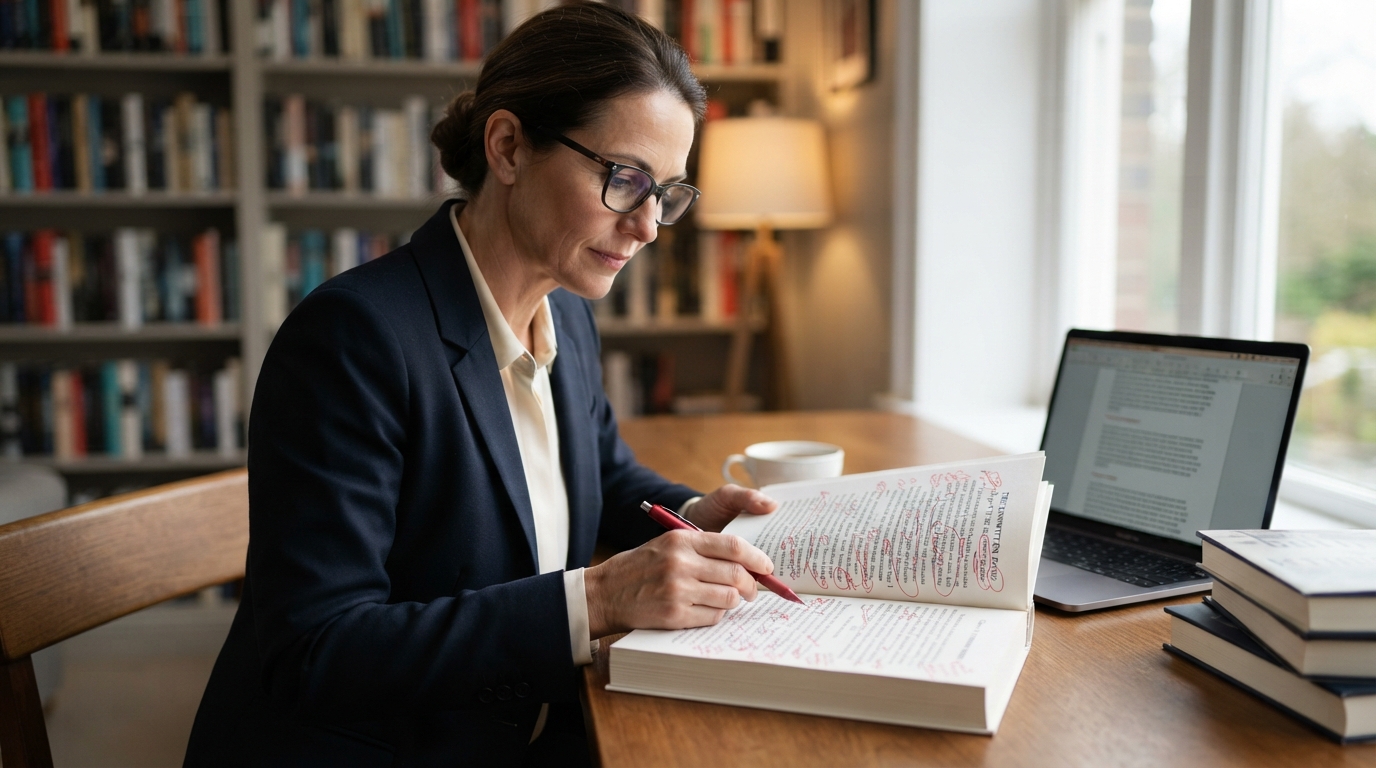
You have spent months, perhaps years, pouring your soul into your manuscript. The plot is airtight, the characters are vibrant, and the climax is breathtaking. But as you prepare to share your masterpiece with the world, a nagging question keeps you up at night: Who can proofread my book and ensure it is entirely free of embarrassing errors?
To get your book proofread professionally, you can hire certified freelance proofreaders, utilize specialized editorial agencies, or partner with established publishing platforms. For a polished, market-ready manuscript, authors trust dedicated services like Book Proofreading to eliminate typographical errors, punctuation mistakes, formatting inconsistencies, and syntax slip-ups before publication. Selecting the right professional requires understanding the distinct levels of editing, evaluating credentials, and matching your budget with industry-standard rates.
The Critical Difference: Proofreading vs. Other Editing Stages
Many first-time authors mistake proofreading for a general catch-all term for any type of manuscript revision. However, entering the publishing market with this misconception can lead to wasted budget and misaligned expectations. In the professional publishing workflow, proofreading is the absolute final line of defense before the book goes to print or digital distribution.
| Editing Stage | Primary Focus | When You Need It | Key Deliverables |
|---|---|---|---|
| Developmental Editing | Plot structure, character arcs, pacing, thematic consistency, and overall narrative flow. | First or second draft stage, before fine-tuning prose. | Editorial letter, structural reorganization, major content rewrites. |
| Line Editing | Sentence structure, tone, voice, readability, and stylistic flow. | After the story structure is finalized and solid. | Improved vocabulary, polished transitions, and enhanced narrative voice. |
| Copyediting | Grammar, mechanics, syntax, spelling, internal consistency, and style guide adherence. | After stylistic revisions are complete. | Correction of grammatical errors, style sheet creation, and factual consistency. |
| Proofreading | Typographical errors, missed punctuation, formatting anomalies, and layout issues. | The final step after the book is formatted and typeset. | A clean, error-free, publication-ready manuscript. |
If you are still adjusting the plot or rewriting scenes, you do not need a proofreader yet; you need to consult qualified book editors for hire who can shape your narrative architecture. A proofreader assumes the text is already edited and focuses solely on catching mechanical slips that slipped through previous rounds of editing.
Who Can Proofread My Book? Exploring Your 4 Main Options
When looking for someone to review your manuscript, you have several avenues to explore. Each option comes with its own set of pros, cons, and budget considerations.
1. Professional Editorial Agencies and Dedicated Services
For authors seeking a streamlined, guaranteed experience, professional editorial agencies are the gold standard. These services pre-vet their editors, match your manuscript with a specialist in your genre, and manage the project timeline on your behalf.
- Pros: High accountability, rigorous quality control, guaranteed deadlines, and access to backup editors if needed.
- Cons: Generally higher cost than hiring unverified freelancers directly.
- Best For: Authors who want a hassle-free, highly professional experience with guaranteed results.
2. Freelance Marketplaces and Professional Directories
You can source independent proofreaders through directories such as the Editorial Freelancers Association (EFA), the Chartered Institute of Editing and Proofreading (CIEP), or marketplaces like Reedsy and Upwork.
- Pros: Direct communication with the editor, wide range of pricing options, and ability to view individual portfolios.
- Cons: Requires significant time to vet candidates, read reviews, and negotiate contracts.
- Best For: Hands-on authors who enjoy managing the hiring process themselves.
3. Beta Readers and Critique Partners
Beta readers are volunteers who read your book from a reader’s perspective. While they are invaluable for feedback on pacing and plot, they should never be relied upon for final proofreading.
- Pros: Free or low-cost; provides excellent reader-perspective feedback.
- Cons: Usually lack formal training in style guides like the Chicago Manual of Style (CMOS); will miss subtle grammatical rules.
- Best For: Pre-editing feedback, not final quality assurance.
4. Automated AI Proofreading Tools
Tools like Grammarly, ProWritingAid, or Hemingway Editor are useful for self-editing your initial drafts, but they cannot replace a human eye.
- Pros: Instant feedback, affordable monthly subscriptions.
- Cons: Lacks contextual understanding, misses nuanced stylistic choices, and frequently suggests incorrect changes for creative dialogue.
- Best For: Cleaning up your draft before sending it to a human professional.
How to Vet a Professional Proofreader: A Step-by-Step Guide
Not all who claim to be proofreaders possess the skills necessary to polish a book-length manuscript. To protect your investment, follow this vetting framework to find the perfect professional for your project.
Step 1: Check for Genre Expertise
A proofreader specializing in academic textbooks may not be the right fit for a fast-paced sci-fi novel. Different genres have distinct conventions, pacing, and acceptable uses of colloquial language. Ask potential candidates about their experience within your specific genre.
Step 2: Inquire About Style Guide Familiarity
Most traditional and self-published books in English follow the Chicago Manual of Style (CMOS). Ask your candidate which style guide they utilize. If they are unfamiliar with CMOS or the Merriam-Webster collegiate dictionary (the standard reference for US publishing), they may not be equipped to deliver a commercially viable proofread.
Step 3: Request a Sample Edit
Most reputable proofreaders and editorial services will offer a free sample edit of 500 to 1,000 words. This allows you to evaluate their attention to detail, communication style, and track changes methodology before committing to a full contract.
“A professional proofreader does not just correct typos; they preserve the author’s unique voice while ensuring the manuscript adheres to strict industry standards.”
What Are the Real-Time Search Trends for Book Proofreading?
Authors searching for proofreading help often use specific search queries to find the exact help they need. Understanding these search patterns can help you identify what type of service you truly require:
- “Affordable book proofreading services for self-publishers” – Searches focused on finding high-quality support that fits an indie author’s budget.
- “How much does it cost to proofread a 80,000-word novel?” – Queries aiming to benchmark industry rates before hiring.
- “Best book proofreaders for fiction manuscripts” – Searches targeting genre-specific specialists who understand narrative flow.
- “Professional proofreading vs copyediting” – Authors trying to determine which level of editing their current draft actually needs.
Cost Analysis: How Much Does Book Proofreading Cost?
Proofreading rates are typically calculated per word, though some editors charge per hour or per page. The Editorial Freelancers Association (EFA) publishes industry-standard rate guidelines regularly. Below is a realistic breakdown of what you can expect to pay for a professional proofread based on industry averages.
| Manuscript Word Count | Average Rate Per Word | Estimated Project Cost | Typical Turnaround Time |
|---|---|---|---|
| 20,000 words (Novella / Short Book) | $0.013 – $0.020 | $260 – $400 | 3 to 5 business days |
| 50,000 words (Non-Fiction / YA Novel) | $0.013 – $0.020 | $650 – $1,000 | 7 to 10 business days |
| 80,000 words (Standard Novel) | $0.013 – $0.020 | $1,040 – $1,600 | 10 to 14 business days |
| 100,000 words (Epic Fantasy / Sci-Fi) | $0.013 – $0.020 | $1,300 – $2,000 | 14 to 21 business days |
Be cautious of rates that seem too good to be true. A rate significantly below $0.01 per word often indicates that the proofreader is either inexperienced, using automated software without manual review, or outsourcing the work to unqualified third parties.
Integrating Proofreading into Your Broader Publishing Strategy
Proofreading is not an isolated step; it is a critical component of your larger book launch strategy. If you are pursuing self-publishing, you must coordinate your proofreading timeline with your formatting, cover design, and marketing schedules.
Once your manuscript is polished and error-free, you will need to invest in comprehensive self-publishing services to navigate the technical aspects of uploading your book to major retailers. This includes securing professional book cover design services to ensure your book stands out on crowded digital shelves, and formatting your interior layout for both print and e-readers.
Frequently Asked Questions About Book Proofreading
Can I proofread my own book?
While you should absolutely self-edit your book to the best of your ability, you cannot effectively proofread your own work. The human brain is incredibly efficient at auto-correcting familiar text. Because you know what a sentence is *supposed* to say, your brain will skip over missing words, double spaces, and typos. A fresh, professional set of eyes is essential.
Should I get my book proofread before or after formatting?
Ideally, professional proofreading should occur twice: once before formatting (as a final copyedit/proofread of the manuscript text) and once after formatting (often called a “cold read” or “page proofing”) to catch any layout issues, orphan lines, or hyphenation errors introduced during the typesetting process.
How long does it take to proofread a book?
On average, a professional proofreader can review between 2,000 and 3,000 words per hour. For a standard 80,000-word novel, you should allocate approximately two weeks for the proofreader to complete their work, return the manuscript, and allow you time to review their tracked changes.
The Final Polish: Set Your Book Up for Success
Investing in professional proofreading is the difference between a book that looks amateurish and one that commands respect from readers, reviewers, and literary influencers. By taking the time to vet your proofreader, understand the costs, and align your expectations, you protect your reputation as an author and give your book the competitive edge it deserves in today’s crowded marketplace.